The impact of digitalization on the automotive sector and vehicle rental
Article from the DRAAYV blog · published on 18/11/2025
Historical text used for this preview. The
trends and general information do not constitute the
current contractual conditions of DRAAYV.
Revision to be carried out before publication
Check the claims on RentGooo/FLASCAM and the implied numerical or regulatory trends. Examine commercial external links before re-linking them. The online payment mentioned for the sector does not describe an available DRAAYV function.
Digital transformation, far from being a simple fashion phenomenon, is a groundswell that is redefining the contours of all industries on a global scale. The automotive sector, historically seen as a bastion of mechanics and heavy engineering, is not immune to this revolution. In Morocco, this transition is particularly palpable. Driven by a young, connected population and a strong political will to modernize the economy, the kingdom is seeing its uses and expectations in terms of mobility profoundly transformed. From the act of purchasing a vehicle to its maintenance, including how to rent it for a weekend, digital is involved at every stage, creating new opportunities for businesses and offering a more fluid and personalized experience for consumers.
Redefining the automotive customer journey
The era when buying a car invariably began with a visit to the dealership is over. Today, the customer journey begins online. Moroccan consumers, like everywhere else, obtain information, compare models, read reviews and configure their ideal vehicle from their computer or smartphone. Manufacturers and distributors have understood this and are investing massively in immersive digital platforms, virtual showrooms and online sales tools.
But digitalization does not stop at the transaction. It now accompanies the vehicle throughout its life cycle. Connected maintenance, thanks to dedicated mobile applications, allows owners to monitor the condition of their car in real time, receive alerts for maintenance and make appointments in just a few clicks. Insurance is also reinventing itself, with the emergence of “connected” or “Pay As You Drive” contracts, which adapt premiums to the actual use of the vehicle, an innovation that promotes more responsible and economical driving.
Vehicle rental in the digital age
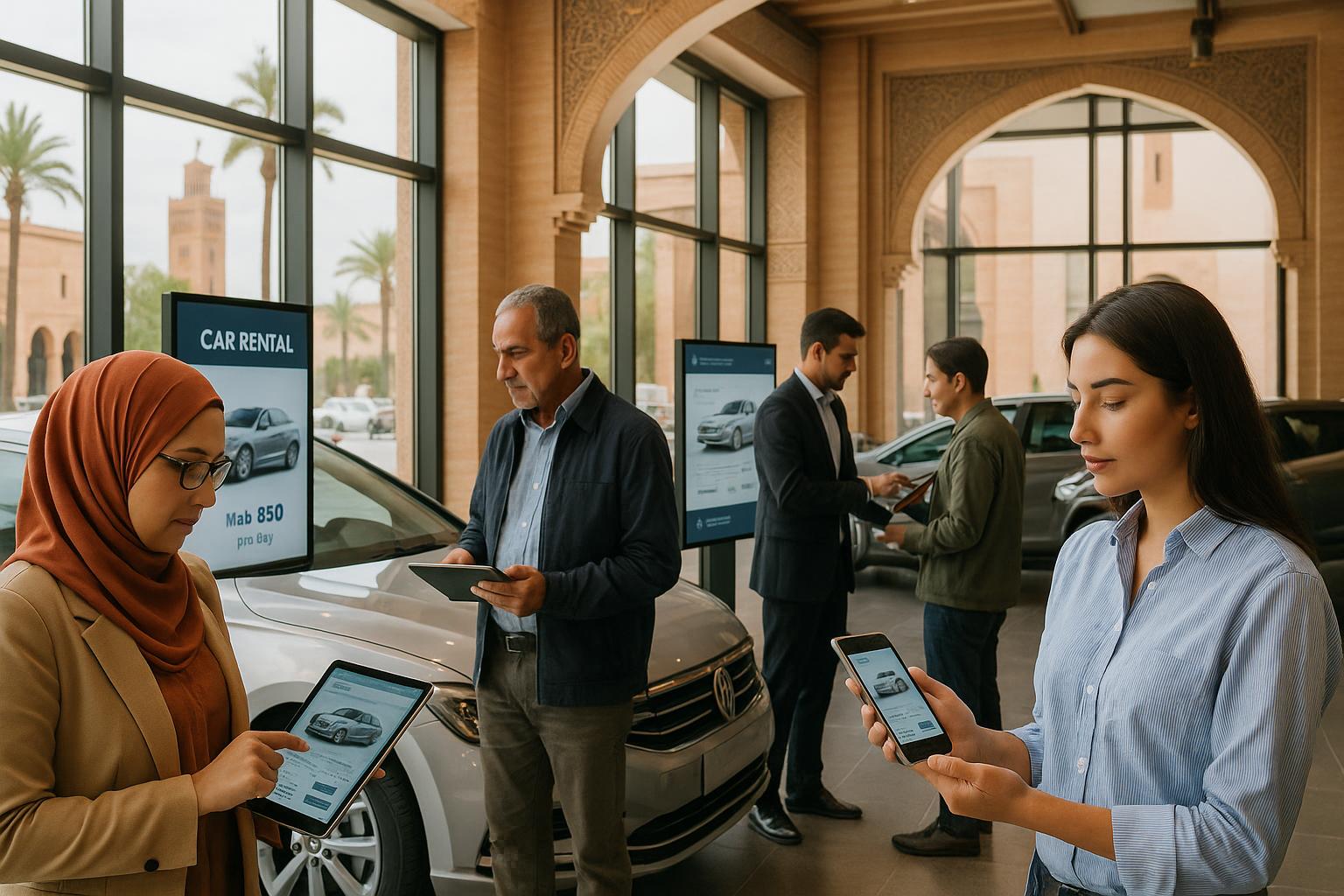
The car rental sector is perhaps one of those where the impact of digitalization is most spectacular. Reserving a vehicle, which could once have been tedious, has become disconcertingly simple. Intuitive web platforms and mobile applications allow customers to choose their model, define pick-up and drop-off dates and locations, and pay securely online. This transparency and ease of access have considerably democratized car rental, making it accessible to a wider and younger clientele.
Behind the scenes, technology is also transforming operations management for agencies. Fleet management software (SaaS) makes it possible to optimize vehicle tracking, maintenance planning and contract management. Innovative Moroccan startups, like RentGooo, are going even further by creating real digital marketplaces. These platforms connect customers directly with a wide range of rental agencies, promoting healthy competition and providing consumers with greater choice. This dynamic has even led to strategic partnerships, such as the one established between RentGooo and FLASCAM (Federation of Driverless Automobile Rentals in Morocco), a sign of the recognition of digitalization as a major growth lever for the entire profession.
The emergence of an integrated mobility ecosystem
Digitalization does not just modernize existing services; it creates new ones. The arrival and massive adoption of VTC (Transport Car with Driver) services in large Moroccan cities are the most striking example. These services, accessible via mobile applications, have complemented the traditional transport offer and meet a need for flexible, on-demand urban mobility. They are part of a broader concept, that of "Mobility as a Service" (MaaS), where the objective is to offer the user a bouquet of transport services (public transport, VTC, self-service bicycles, car rental) accessible from a single interface.
This vision of integrated mobility is particularly relevant for Morocco, which is investing massively in its public transport infrastructure. Digitalization acts as the glue that binds these different bricks together, allowing users to compose their journey in a fluid and optimized manner, for example by combining a tram journey with a ride in a VTC for the “last kilometer”.
Challenges and future prospects
While digital transformation opens up exciting prospects, it also raises challenges. Cybersecurity has become a crucial issue, both to protect customer personal data and to guarantee the integrity of business management systems. The digital divide is another reality to take into account, in order to ensure that these new mobility solutions benefit the entire population and do not create new forms of exclusion.
However, the trajectory is clear. The automotive and vehicle rental sectors in Morocco will continue their digital transformation. The future will likely see the rise of increasingly connected and autonomous vehicles, even greater personalization of services and ever finer integration between different transport options. The companies that succeed will be those that are able to place technological innovation at the heart of their strategy, while remaining focused on the needs and expectations of a constantly evolving consumer.
Digital as a driving force for a new era
Digitalization is not a simple trend, but the main driver of the evolution of the automobile sector and vehicle rental in Morocco. By making services more accessible, more transparent and more personalized, it responds to the aspirations of a society on the move. It promotes the emergence of a richer and more diversified transport ecosystem, where each need can find a suitable response. For travelers and residents alike, this transformation means greater freedom of choice and a better user experience. Companies in the sector have a historic opportunity to reinvent themselves and offer innovative urban and tourist mobility solutions, thus actively contributing to shaping the future of travel in the kingdom.