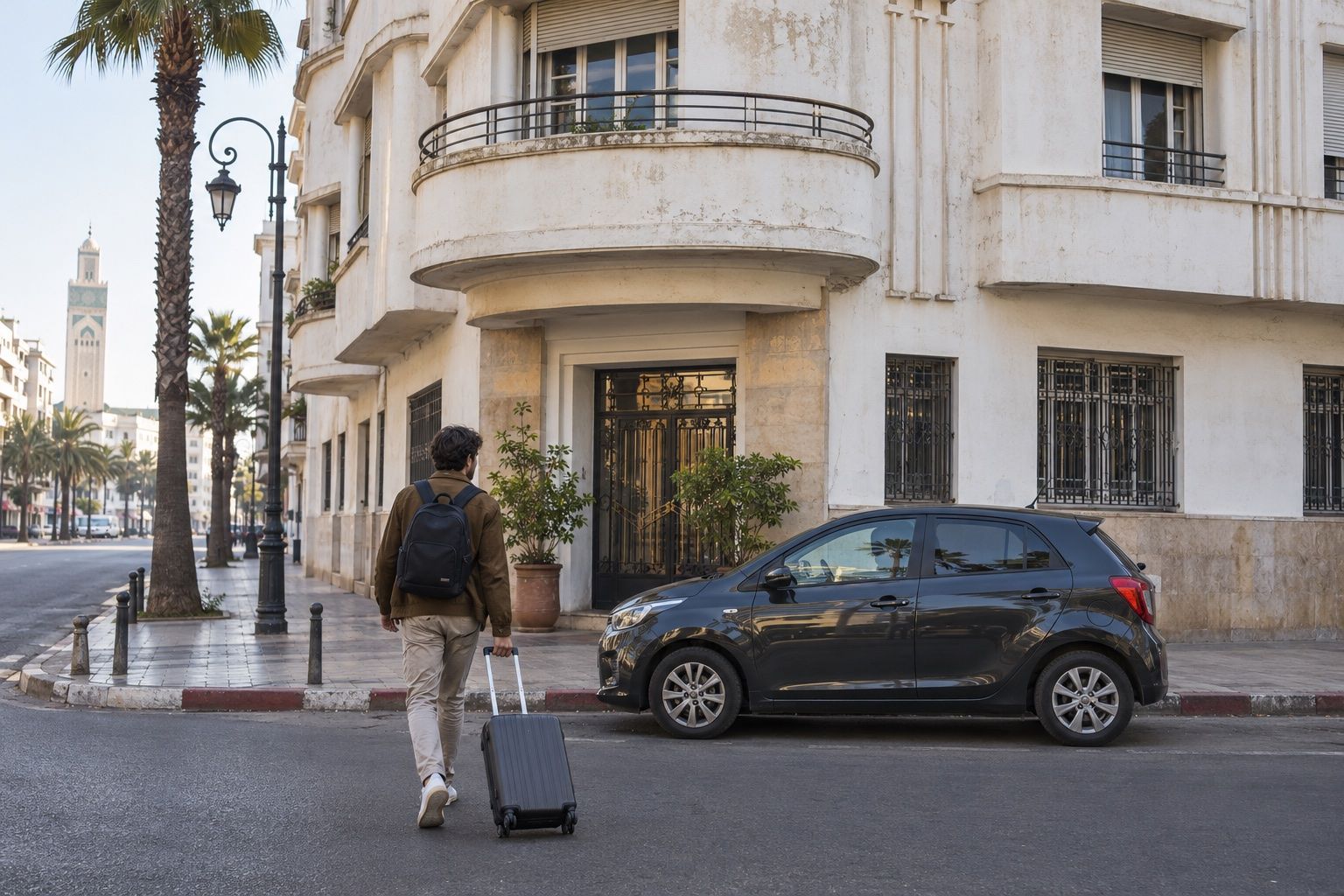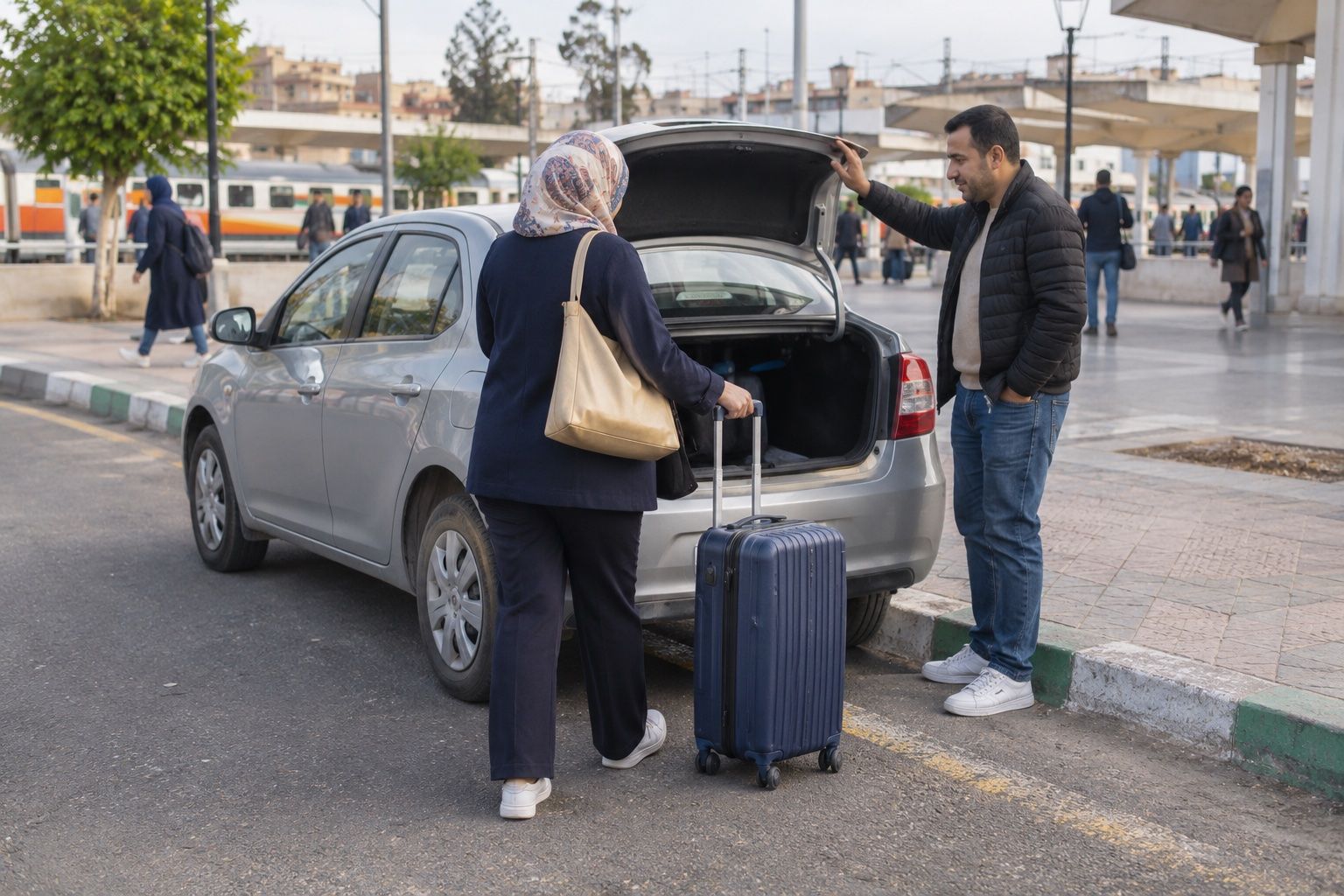
Should you collect a hire car as soon as you step off the train? That depends on what comes next. If you are spending the night in a riad and the day on foot around Place El Hdim, you could leave the car until tomorrow. If relatives are expecting you for lunch outside town and you have two children and their luggage with you, collecting the keys at the station makes more sense. Here is how to decide and enjoy your first day in Meknes without spending it moving suitcases around.
Meknès-Ville or Al Amir Abdelkader: which name should you give the agency?
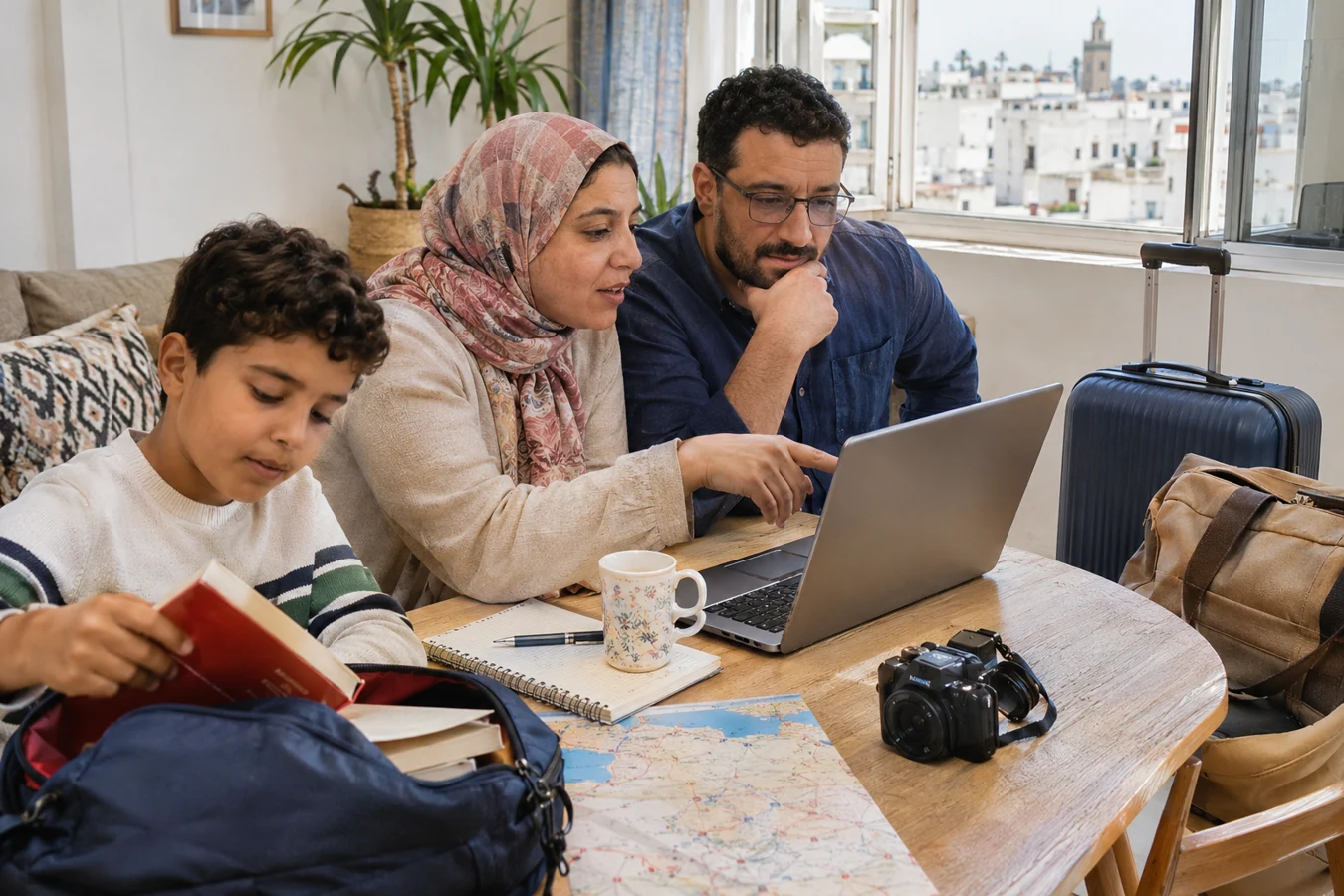
When arranging your hire, open the details of your rail journey. Look for the station where you get off, particularly if somebody else bought tickets for the whole family. Send the agency the name shown, the date and the scheduled arrival time. If you have the train number, include it in the same message. The person organising the handover will have everything together, instead of an arrival time from one passenger, a screenshot from another and an “I’m coming tomorrow” read the following morning.
Before leaving home, make sure you can answer two questions. Where do you go once you are outside the station? Who do you contact if nobody is there? A map pin is helpful for a driver. As a passenger on foot, you may find a description of the exit more useful. Ask which way to leave the station, whether to wait there or whether you should walk on to the car. The precise meeting place is the one the agency confirms for your arrival.
A family could send a single message along these lines:
Hello, our ticket says Meknès Al Amir Abdelkader, Saturday at 11:40 am. We are two adults and two children with two suitcases and a folding pushchair. Could you confirm where to meet the agent when we leave the station and which number to call if our train is delayed?
The time here is just an example. Use the one on your ticket and give a phone number that will work when you arrive. If a relative booked from abroad and is staying at home, include the number of an adult on the train as well. That saves everyone from routing calls through someone who might be thousands of miles from the platform.
Collect the keys at the station or start your stay on foot?
Picture your first hour in Meknes. You plan to leave the bags at the riad, have lunch near the medina and spend the afternoon around Bab Mansour. Tomorrow you are staying in town too. With that itinerary, the car would mainly carry your luggage to your accommodation, where you would then need somewhere to park it. Ask the riad what a transfer from your particular station would cost and where the driver could drop you off. That gives you a price and an address to base your decision on.
Now picture a family spending several days in the region. Some of their bags are going to the grandparents’ house, the travel cot needs to come back with them that evening and they have an early start the next day. Collecting the car at the station means they can settle the children in and drop things off as they go. What they need to know before booking is whether an agent can meet their train and whether the proposed car will take everyone and everything.
DRAAYV arranges the handover with an agent. Wait for the team to confirm before counting the car as booked. The advertised offer has a minimum of three full days of car hire. This matters if you only need a car for a few hours or for a single excursion. You can check the terms and arrange your car pickup at Meknes railway station.
A couple arriving late on Friday afternoon and leaving after Sunday lunch may have booked two nights away while falling well short of three full days. On the other hand, four nights in the region might leave plenty of time to pick up a car on the second morning. Put the actual collection and return times on your calendar before comparing the options. The number of hotel nights alone rarely settles the car hire question.
Staying in the medina changes how you arrive
The address on your riad confirmation tells you where you will sleep. For your first drive you may need a second address, the place where you can actually get out with your bags. Ask your host where to unload, which gate to use on foot and where to leave the car overnight. If they recommend a parking spot, ask whether you pay there, whom to pay and how to find your way back the next morning. Keep those directions with your room confirmation.
When you have a pushchair, a large bag and a child who has just fallen asleep, a walking time in minutes can be rather abstract. A more useful question is, “Can I wheel the suitcase all the way to the entrance, or will I need to carry it for part of the walk?” The answer can help you decide whether to go together, ask your host for help with the bags or pack a smaller bag to take in first.
If your train gets in before your room is ready, ask what time you can drop off your luggage. Being able to leave the cases and head straight out for lunch changes the whole morning. If a luggage drop is impossible, it helps to know before planning a museum visit or a long walk. You could move the visit to later in the day, eat near the accommodation or agree on a later arrival with your host.
For a hotel in the new town, the questions are slightly different. The hotel might advertise parking. Find out where the entrance is and whether a space is guaranteed for your dates. A map pin at reception can bring you to the wrong side of the building when you are behind the wheel. By the end of the day, one message from the hotel naming the right street can save an extra circuit with everyone still in the car.
Choose a car around what you are bringing
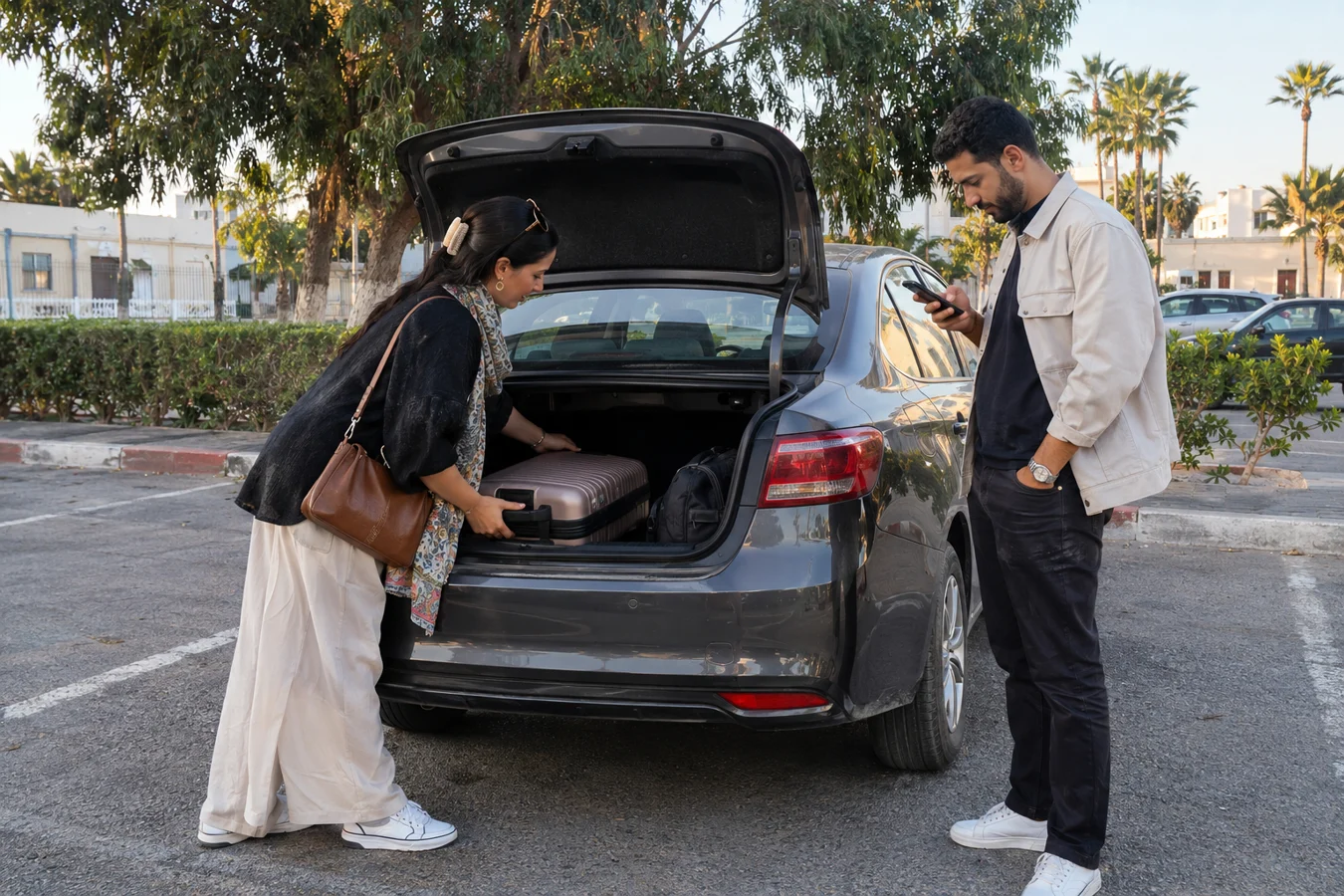
A five-seater has room for five people. That tells you surprisingly little about how much space will be left for their bags. Count the big suitcases, then add the awkwardly shaped items: a pushchair, a folding chair, a rigid sports bag or presents you are bringing for relatives. If something is bulky, measure it folded. A length in centimetres gives the agency a better chance of answering accurately than the assurance that yours is “just a normal pushchair”.
For two travellers, a small car may be a comfortable choice if you like driving it and both suitcases fit in the boot. For four adults moving between several places to stay, think about the mornings when you have to pack up again. Everyone will appreciate loading the bags without having to keep one between their feet. If you would like an automatic or need a suitable child seat, have the agency confirm the request in writing and check the total that goes with it.
Still considering whether to collect the car in Meknes or start driving from a different stop on your trip? You can compare car hire offers in Morocco using the dates and pickup location you have in mind. Then read the terms for each offer. For a rail journey, look particularly closely at where you would actually collect the keys. A good city centre rate could work well if the agency is near your hotel. Just factor in the journey to get there.
Arriving in the morning? Leave some time for Place El Hdim
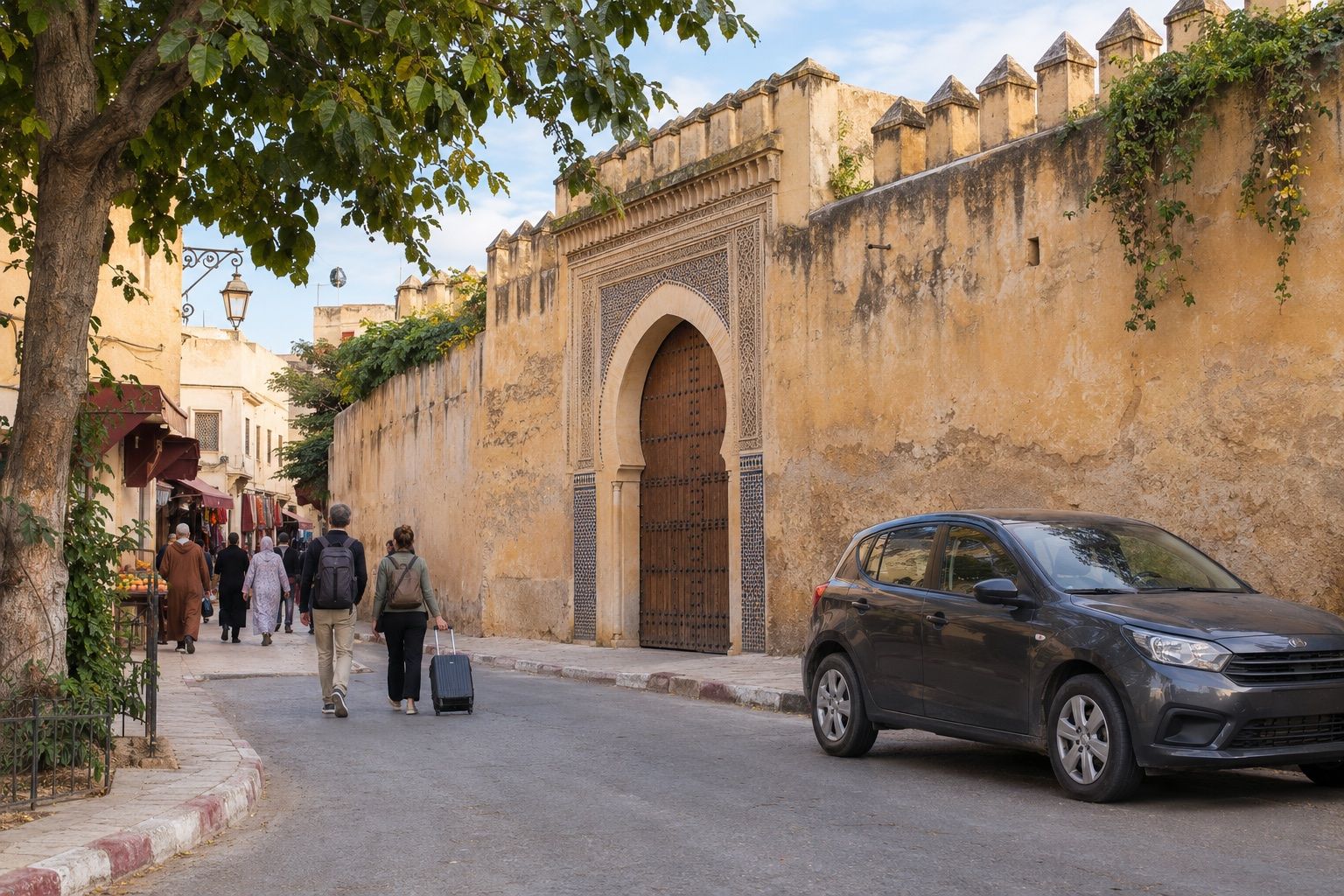
For a first day in Meknes, we would start at Place El Hdim once the luggage is out of the way. It gives everyone an easy meeting point if some people want to explore while others would rather sit down. Take a look at Bab Mansour before turning into the surrounding streets. If you have children with you, let them choose one detail of the gate to photograph. You will probably spend longer looking at the façade than you expected.
On the square, Dar Jamaï fits easily into the same half-day. Built in 1882 as a private residence, it now houses the National Museum of Music. Keep it in mind if one of you is interested in instruments and another in architecture. You can enjoy the same visit while lingering over quite different things. Check the opening arrangements for the day you intend to go before making it your only plan for the afternoon.
For lunch, I would keep the timing fairly loose. A mid-morning arrival need not mean that everyone will be free an hour later. There is the walk off the train, the car handover if you have arranged one, then the welcome at the riad. A tight table booking has you checking the time just as you are starting to discover the town. If there is a particular place where you want to eat, choose a sitting that leaves room for a delay.
After lunch, pick one thing you really want to do. It might be Dar Jamaï, a walk through the medina or an entire late afternoon with your relatives. On a first visit, I would happily spend the afternoon at the museum and walk back to the accommodation. The route is easier to remember on the second pass, when you recognise the shop where you hesitated over a turning. It is also a chance to spot somewhere for breakfast if you plan an early start tomorrow.
If your train arrives late, plan the first evening
A spare hour feels different at either end of the day. In the morning, it is enough time to fit in another walk. In the evening, you might prefer to use it for an unhurried dinner or to get a child into bed before they fall asleep on the luggage. If you plan to collect a car that evening, have the appointment confirmed for your specific arrival time. Let your accommodation know when to expect you too, especially if somebody needs to come over to let you in.
If a delay is announced on board, give the agent the revised arrival estimate and wait for a reply. If you need to change the meeting place or rearrange the handover, you can settle it while you are still in your seat. Try to avoid promising your relatives a dinner time worked out from the scheduled train arrival. Send them a message once the luggage is in the car. By then, you will know when and where you are actually starting from.
As a couple, you might be happy to leave your bags and head straight back out to see the city that evening. As a family, dinner a few steps from your room could be more appealing than crossing Meknes to reach a restaurant you bookmarked weeks ago. Ask your host where guests can still eat at the time you expect to arrive. If you are joining relatives, tell them what you would enjoy: sitting down to dinner together, or simply sharing a pot of tea and leaving the longer visit until tomorrow.
On departure day, work backwards from the train
The time that matters on departure day is when you want to be standing on the platform with all your bags. Work backwards through the morning from there. By what time should you have handed back the keys? Where will the agent collect the car? Have you allowed for a fuel stop if the agreed terms call for one? If you are staying in the medina, add the time it takes to walk back to the car before you can even start loading the boot.
Check the departure station printed on your return ticket as well. You can leave from a different station, but the agency needs to know where you want to return the car. If you change to another train during your stay, pass on the details as soon as the decision is made. The agent can then confirm whether the new time and place work. Changing a ticket on your phone does not automatically change the appointment to return your car.
With children, pack the bag you will keep with you on the train the night before. Put in what you need for the journey and keep the tickets accessible once the big cases are closed. When it is time to hand back the keys, checking the door pockets, back seats and boot is much easier if everyone already knows which bag to pick up. Remember the phone cable as well. It is the sort of thing you only miss once you have taken your seat on the train.
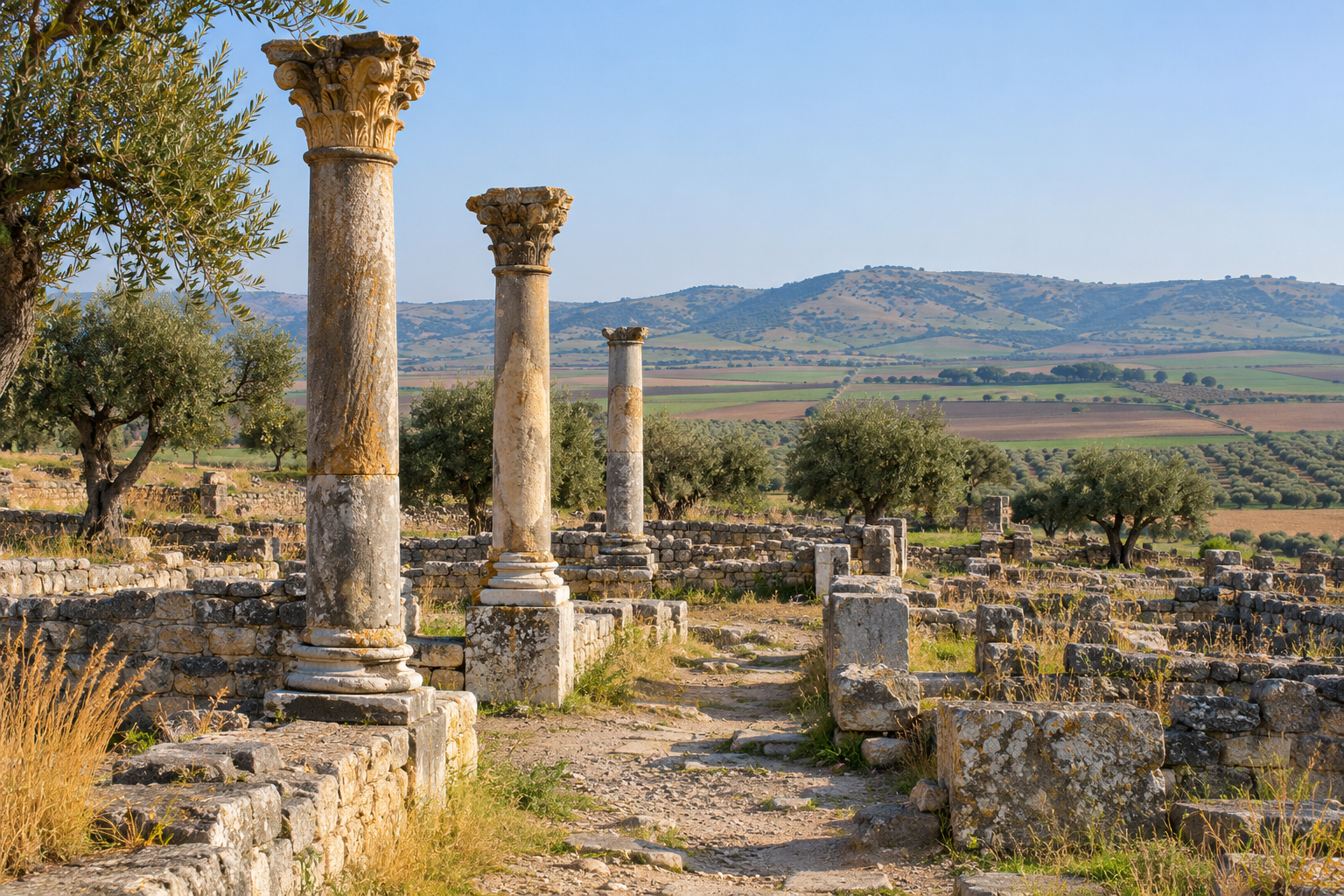
If Meknes is the start of a longer stay, you have another choice ahead. Would you like to spend the following night here or head out to Volubilis and then on to Fez? We have put together a separate guide to that decision, with an itinerary spread over several days. That leaves your first day free for Meknes and lets you choose when a car will be most useful for the rest of your journey. Explore the itinerary between Fez, Meknes and Volubilis